

Social media is overflowing with running tips, training plans, and motivational content. From Instagram reels to TikTok snippets, runners at every level are sharing advice. But is all this information helpful—or harmful? For middle and long distance runners, understanding the pros and cons of online coaching versus in-person coaching is crucial, especially when your goals and athlete level come into play.
Why Is Running Advice Everywhere Online?
- Accessibility: Anyone can post their training methods.
- Community Connection: Social platforms create instant support networks.
- Influencer Culture: Athletes and coaches use social media to build personal brands.
Athlete/Runner Level Matters
Not all runners have the same needs:
- Competitive Runners: Those aiming for PBs, championships, or national standards require structured, periodised training, precise workload monitoring, and advanced strategies.
- Recreational or Park Runners: Often run for enjoyment, fitness, or social reasons. They don’t need peak performance plans or complex physiological testing.
- Event-Focused Runners: Preparing for marathons or track races need tailored tapering, fueling strategies, and recovery protocols.
Your level and goals determine whether generic advice is enough—or if you need a qualified coach who understands the science behind performance.
Benefits and Risks of Social Media Running Advice
Pros
- Free access to basic training principles.
- Exposure to different philosophies and drills.
- Motivation from seeing others train.
Cons
- Advice often lacks individualisation.
- Conflicting information can cause confusion.
- Not all sources are qualified or credible.
Online Coaching vs In-Person Coaching for Runners
Online Coaching
Advantages
- Flexible and location-independent.
- Cost-effective compared to face-to-face sessions.
- Access to elite coaches worldwide.
Pitfalls
- Limited real-time feedback.
- Risk of generic, one-size-fits-all programs.
- Harder to monitor execution and accountability.
In-Person Coaching
Advantages
- Immediate Feedback: Coaches can correct form and pacing on the spot.
- Holistic Monitoring: They observe biomechanics, fatigue, and mental state during training and racing.
- Greater Investment in Your Success: Their reputation is tied to your results.
- Advanced Support:In-person coaches often provide:
- Tactical race advice.
- Shoe and equipment recommendations.
- Guidance on diet and fueling strategies.
- Lactate testing and performance profiling.
- Supplementation advice (e.g., bicarbonate loading).
- Connections to other professionals such as strength coaches for gym work and physiotherapists for injury management.
- Recovery strategies tailored to your training load.
- Team or Squad Environment: Many in-person coaches offer group sessions, creating a social connection and competitive atmosphere that boosts motivation.
- Ongoing Education: Verified coaches maintain certifications and stay updated with sports science.
- Race-Day Insight: Watching you compete provides context for tactical and psychological adjustments.
Challenges
- Higher cost.
- Location based.
- Scheduling constraints.
Comparison Table: Online vs In-Person Coaching
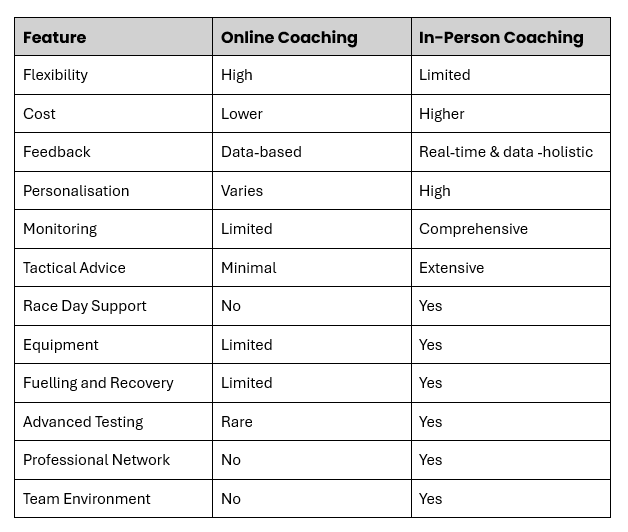
Key Takeaways
- Your level and goals matter—competitive runners need more than generic advice.
- Verify your coach’s credentials—online or in-person.
- Personalisation is key for performance and injury prevention.
- Social media is great for inspiration, not for structured training.
- If you want peak performance, in-person coaching offers unmatched depth, advanced support, and a motivating squad environment.